
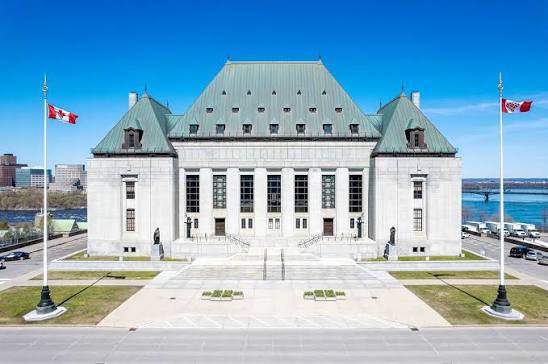
Canada's highest court has upheld most of Quebec's secularism law, commonly known as Bill 21, in a landmark ruling on the use of the notwithstanding clause.
The Supreme Court of Canada released its decision Friday, November 27, ruling that Quebec validly invoked the notwithstanding clause in the Canadian Charter of Rights and Freedoms and the override provision in Quebec's Charter of Human Rights and Freedoms.
Adopted in June 2019, the law prohibits certain public employees, including public school teachers, police officers and government lawyers, from wearing religious symbols while carrying out their duties.
The court upheld the law's restrictions but found that Section 8, which requires certain individuals to exercise their functions with their faces uncovered, is unconstitutional to the extent that it applies to elected members of Quebec's National Assembly. The requirement infringes democratic rights protected by Section 3 of the Canadian Charter.
The court also concluded that the legislation does not violate the minority-language education rights protected by Section 23 of the Charter. It found that Section 28, which guarantees Charter rights equally to men and women, does not create an independent right.
Under Section 33 of the Canadian Charter, Parliament and provincial legislatures can temporarily shield legislation from certain Charter protections. The Supreme Court found that the use of the clause is not subject to limits beyond those expressly set out in its text.
The ruling also confirms that courts may issue declarations stating that legislation is inconsistent with Charter rights even when the notwithstanding clause has been invoked. The court did not issue such a declaration in this case.
The decision has implications beyond Quebec, including for Alberta and other provinces, by clarifying the constitutional framework governing the use of the notwithstanding clause.
The appeals and Quebec's cross-appeal were dismissed.