
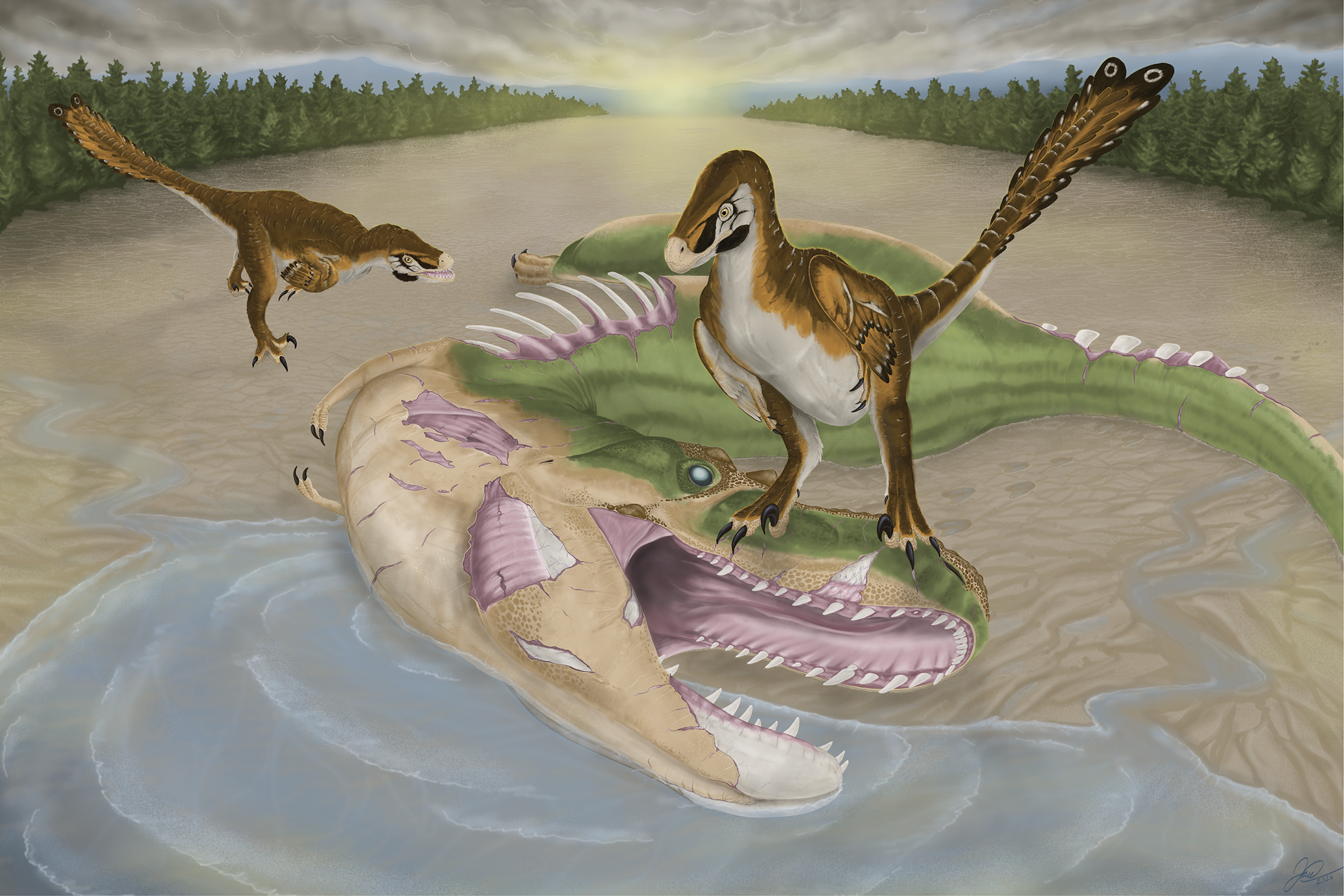
A dinosaur fossil discovered near Drumheller may have revealed something scientists have never documented before: evidence of a small raptor feeding on a much larger tyrannosaur.
And the alternative explanation is just as fascinating.
Researchers at the University of Alberta examined tooth marks found on the lower jaw of an Albertosaurus, a relative of Tyrannosaurus rex that roamed what is now Alberta roughly 67 to 73 million years ago.
The fossil belonged to an Albertosaurus that was at least eight years old, approximately six metres long and weighing an estimated 530 kilograms.
It was discovered by a member of the public in 2022 and later examined by technicians at Drumheller's Royal Tyrrell Museum, who noticed unusual markings on the jawbone.
University of Alberta paleontology master's student Joshua Doyon investigated the marks, comparing their spacing with the teeth of other carnivorous dinosaurs that lived in the same prehistoric ecosystem.
The most likely culprit? A dromaeosaurid, commonly known as a raptor.
Researchers believe the smaller dinosaur may have scavenged the Albertosaurus after it died, potentially providing the first documented evidence of a raptor feeding on a tyrannosaur.
But there's another possibility.
The marks could have been left by a baby Albertosaurus, approximately two metres long. If that's the case, the fossil could provide evidence of cannibalism within the species.
Scientists found no signs of healing around the tooth marks, suggesting they were made around the time of death or afterward.
The discovery doesn't establish what killed the larger dinosaur, but it offers an extraordinary glimpse into the food chain of prehistoric Alberta.
The findings were published October 7 in the Journal of Paleontology.